 blackseed
blackseed
blackseed
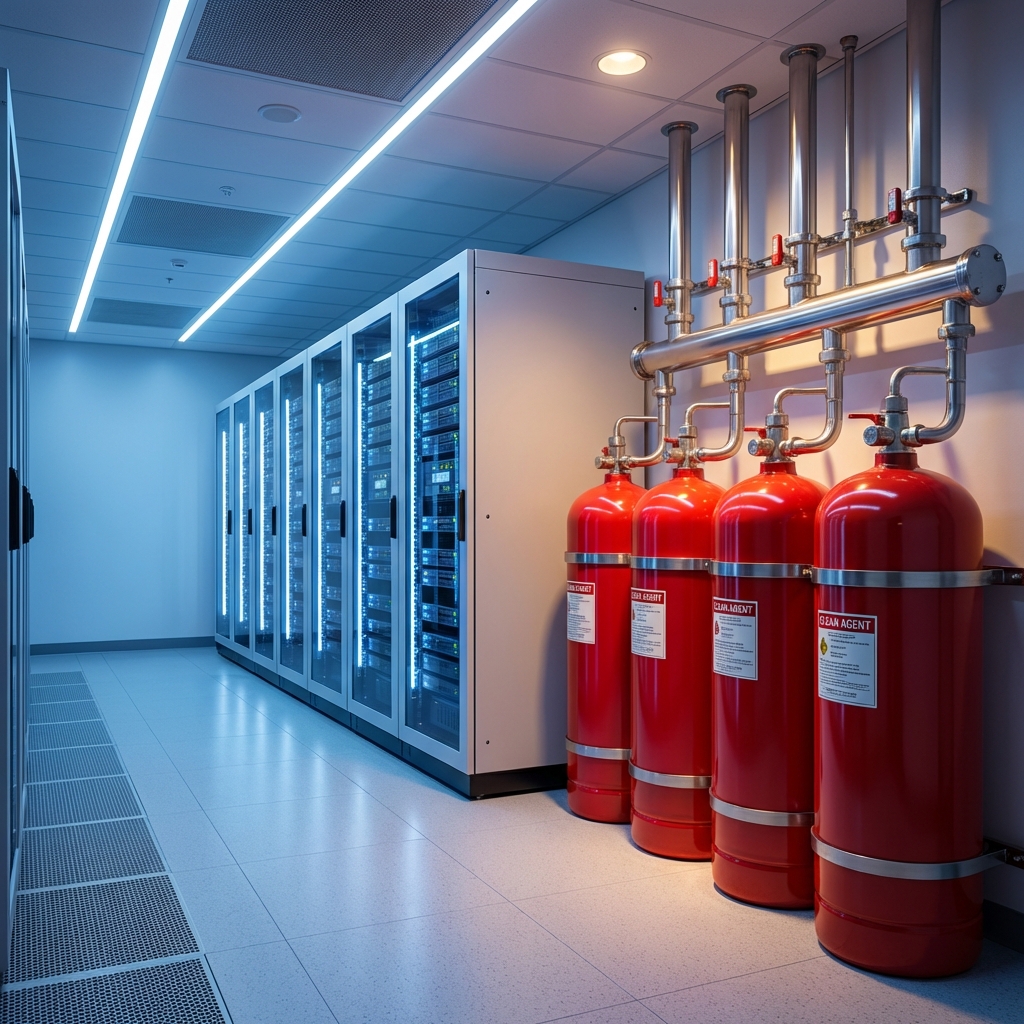
Traditional water sprinklers are effective, but for certain high-value environments, they can cause as much damage as the fire itself. Gaseous fire suppression systems offer a sophisticated alternative designed to protect critical assets and ensure business continuity.
The most significant advantage of gaseous systems is that they are "clean agents." Unlike water sprinklers, which can destroy electronics, paper records, and delicate artifacts, gaseous systems discharge a dry gas that leaves absolutely no residue.
This means that after a fire event, there is no water to mop up, no mold to worry about, and no need to replace equipment that was damaged by the suppression agent itself.
Speed is critical in fire suppression. Gaseous systems are designed to detect and suppress fires at their incipient stage—often before a flame is even visible.
Did You Know?
Clean agent systems typically reach extinguishing concentration levels in 10 seconds or less. This rapid response stops the combustion process immediately, minimizing heat damage and toxic smoke production.
Modern clean agents like FM-200, Novec 1230, and Inert Gases (Nitrogen/Argon blends) are safe for use in occupied areas. They work by absorbing heat or reducing oxygen levels slightly—just enough to stop the fire but keeping the atmosphere breathable for humans during evacuation.
Because the gas is electrically non-conductive, it can be discharged safely into operating server rooms, data centres, and electrical control rooms without causing short circuits. This allows critical systems to potentially remain operational during and after a minor incident.
While the initial investment for a gaseous suppression system may be higher than traditional sprinklers, the cost of downtime and asset replacement far outweighs the installation expense. For mission-critical infrastructure, it is the superior choice.
Not always. Building codes often still require sprinklers for structural protection. Gaseous systems are frequently used as a first line of defense to protect contents, with pre-action valves on sprinklers to prevent accidental water discharge.
The agent itself (like Novec 1230) does not expire if contained properly. However, cylinders require hydrostatic testing typically every 5 to 10 years depending on local regulations and the type of cylinder.
When designed correctly to standard concentrations, clean agents are non-toxic to humans. Safety margins are calculated to ensure the concentration is high enough to stop fire but low enough to be safe for occupants.
Discharging gas into a sealed room increases the pressure. Pressure relief vents (PRV) are installed to allow excess pressure to escape preventing structural damage to walls and doors.
Yes, for the system to be effective, the room must be able to hold the gas concentration for a specific "hold time" (usually 10 minutes). Room Integrity Testing is performed to verify this.
Novec 1230 and Inert Gases are considered the most eco-friendly. They have zero Ozone Depletion Potential (ODP) and extremely low (or zero) Global Warming Potential (GWP).