 blackseed
blackseed
blackseed
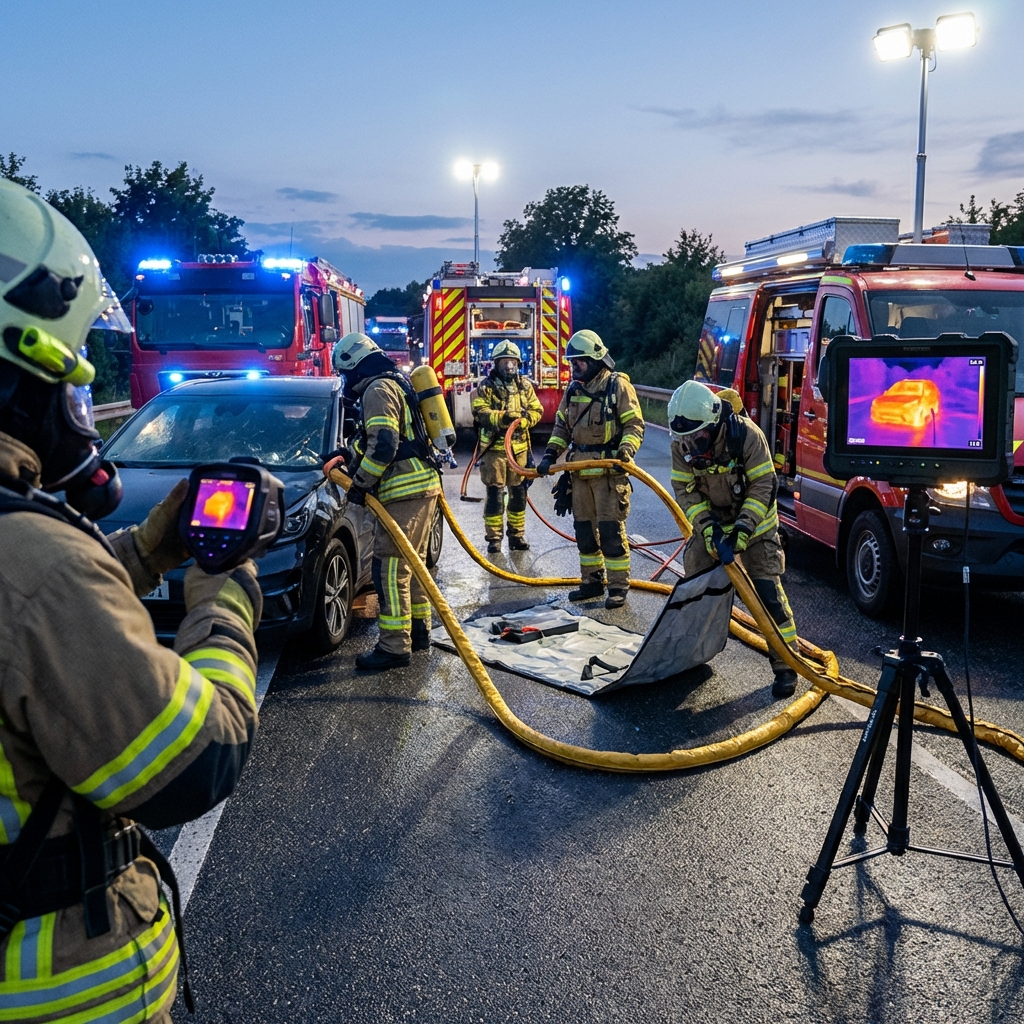
When dealing with electric vehicles (EVs), the rules of engagement change. Lithium-ion battery fires burn hotter, last longer, and present unique challenges that every owner and first responder must understand.
Traditional firefighting techniques are often ineffective for lithium-ion battery fires. The primary challenges include:
Extinguishing an EV fire can require 3,000 to 8,000 gallons of water to cool the battery pack sufficiently.
Burning batteries release toxic fluoride gases, requiring responders to use full breathing apparatus (SCBA).
If you suspect your EV is catching fire:
Remember, thermal runaway events can flare for hours. Do not attempt to return to the vehicle even if the smoke subsides.
Lithium-ion batteries contain their own fuel and oxygen, allowing them to burn independently of external oxygen. This creates a self-sustaining fire that is difficult to cool down.
For a small fire not involving the battery (e.g., upholstery), possibly. But for the battery pack itself, standard extinguishers are ineffective. Only large volumes of water or specialized agents work.
It can take between 3,000 to over 8,000 gallons of water to fully cool the battery cells and stop thermal runaway, compared to a few hundred gallons for a conventional car fire.
Stranded energy refers to the electrical energy remaining in a damaged battery. Even after a fire is out, this energy can short-circuit and cause the battery to reignite hours or days later.
Only by professionals aware of the risks. Damaged EVs usually need to be transported on a flatbed and stored in a designated isolation area away from other vehicles.
Reignition can occur up to 72 hours or more after the initial incident due to ongoing internal chemical reactions within the damaged cells.