 blackseed
blackseed
blackseed
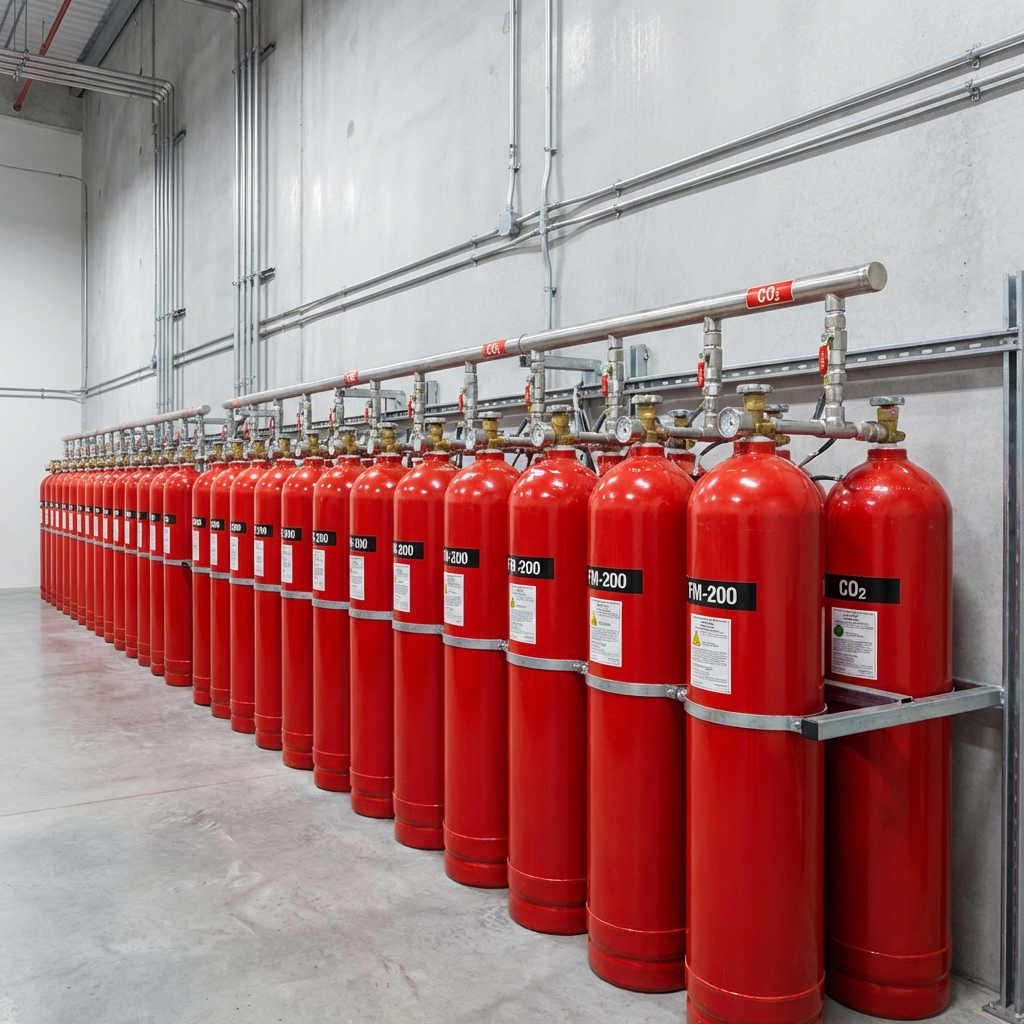
When water isn't an option—such as in server rooms or electrical facilities—gas suppression systems are the gold standard. We break down the differences between the main players: Chemical Agents and Inert Gases.
These agents extinguish fire primarily by removing heat. They are liquid in the cylinder but vaporize upon discharge.
Inert gases work by lowering the oxygen concentration in the room to a level where fire cannot burn (below 15%), but humans can still breathe (above 12%).
The Verdict
Choose Chemical Agents (Novec 1230) if you have limited space for cylinders. Choose Inert Gas if the cylinders need to be far away or you want the most "green" solution.
Chemical agents (synthetic) cool the fire to extinguish it, while inert gases (natural) displace oxygen to smother the fire.
Yes, but its production is being phased down under the F-Gas regulations due to high Global Warming Potential. Recycled FM-200 is available, but Novec 1230 is the preferred alternative.
Yes, when designed correctly. Both types are safe for occupied spaces at design concentrations. Alerts always sound before discharge to allow evacuation.
No. They are "clean agents," meaning they are electrically non-conductive and leave no residue, making them ideal for server rooms and electronics.
Typically, hydrostatic testing is required every 10 years, though visual inspections and pressure checks should happen at least annually or semi-annually.
Novec 1230 fluid is stable and has a long shelf life in the cylinder. Once discharged into the atmosphere, it breaks down in about 5 days.