 blackseed
blackseed
blackseed
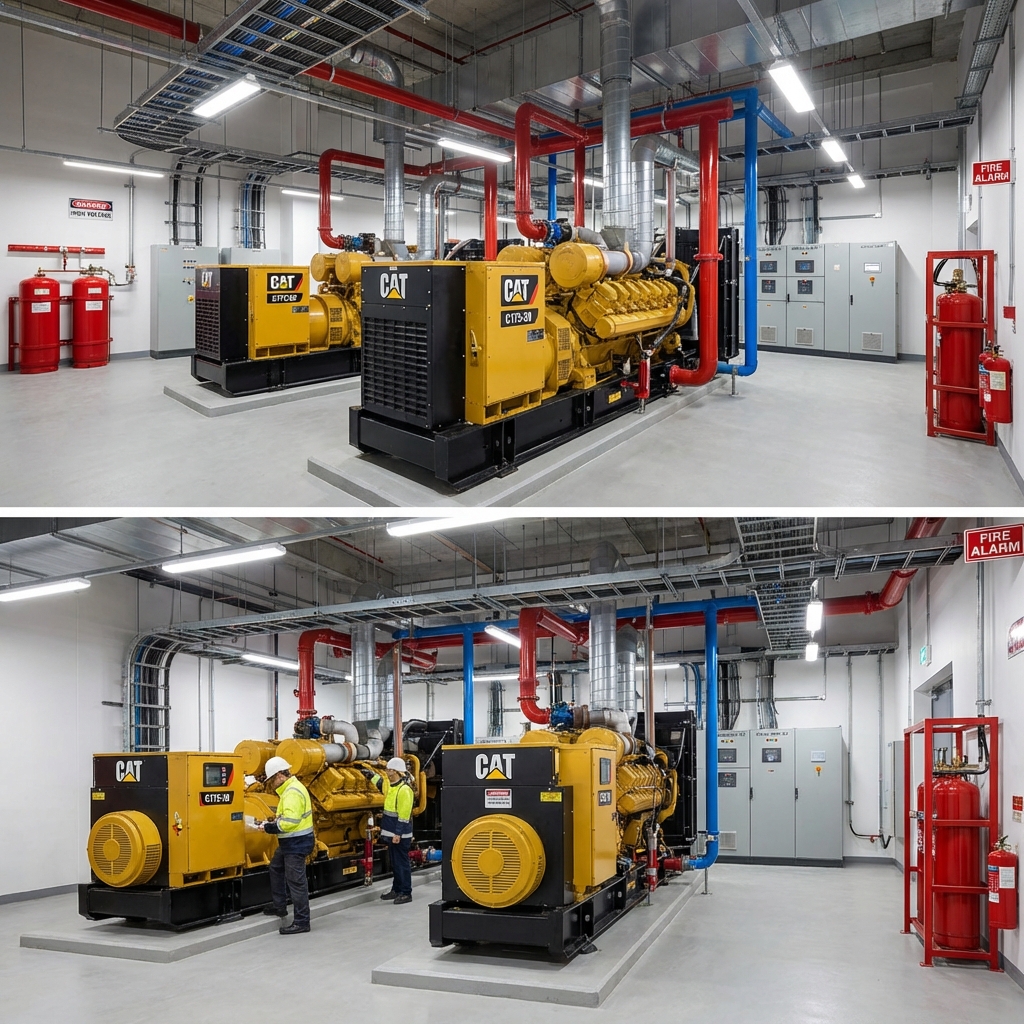
Reliability is the currency of the data centre world. When mains power fails, backup generators kick in. But these powerful diesel engines introduce significant fire risks—combustible fuel, high heat, and electricity.
Generator rooms are particularly hazardous because they combine three key elements of the fire triangle: fuel (diesel), heat (from the engine and exhaust manifold), and oxygen (high ventilation requirements). A fuel leak onto a hot manifold is the most common cause of fire.
Traditionally, CO2 systems were used, but they pose a suffocation risk to personnel. Modern solutions prioritize safety and speed.
Local Application Water Mist
Instead of flooding the whole room, nozzles are aimed directly at high-risk areas like the turbocharger and fuel lines. This suppresses the fire at the source instantly.
The high airflow and ventilation in generator rooms can dilute smoke, making standard smoke detectors slow to react. We recommend combining smoke detection with Flame Detectors (UV/IR) which "see" the fire instantly, regardless of smoke drift.
The most common cause is a fuel or oil leak spraying onto hot engine parts (like the exhaust manifold or turbocharger), causing immediate ignition.
High-pressure water mist is excellent as it cools hot surfaces to prevent reignition and suppresses the flame. CO2 is effective but dangerous for occupied spaces.
Yes. The fire detection system should interlock with the generator control panel to shut off the fuel supply and stop the engine immediately upon confirmed fire detection.
Yes, condensed aerosol units are a compact and effective solution for generator rooms, especially where piping water or gas is difficult. They are rugged and low-maintenance.
Visual strobes and high-decibel sounders are required. More importantly, the system should automatically trigger shutdown protocols without human intervention.
Often, yes. Smoke can be blown away by cooling fans. Heat detectors or optical flame detectors provide more reliable detection in the turbulent environment of a running generator room.