 blackseed
blackseed
blackseed
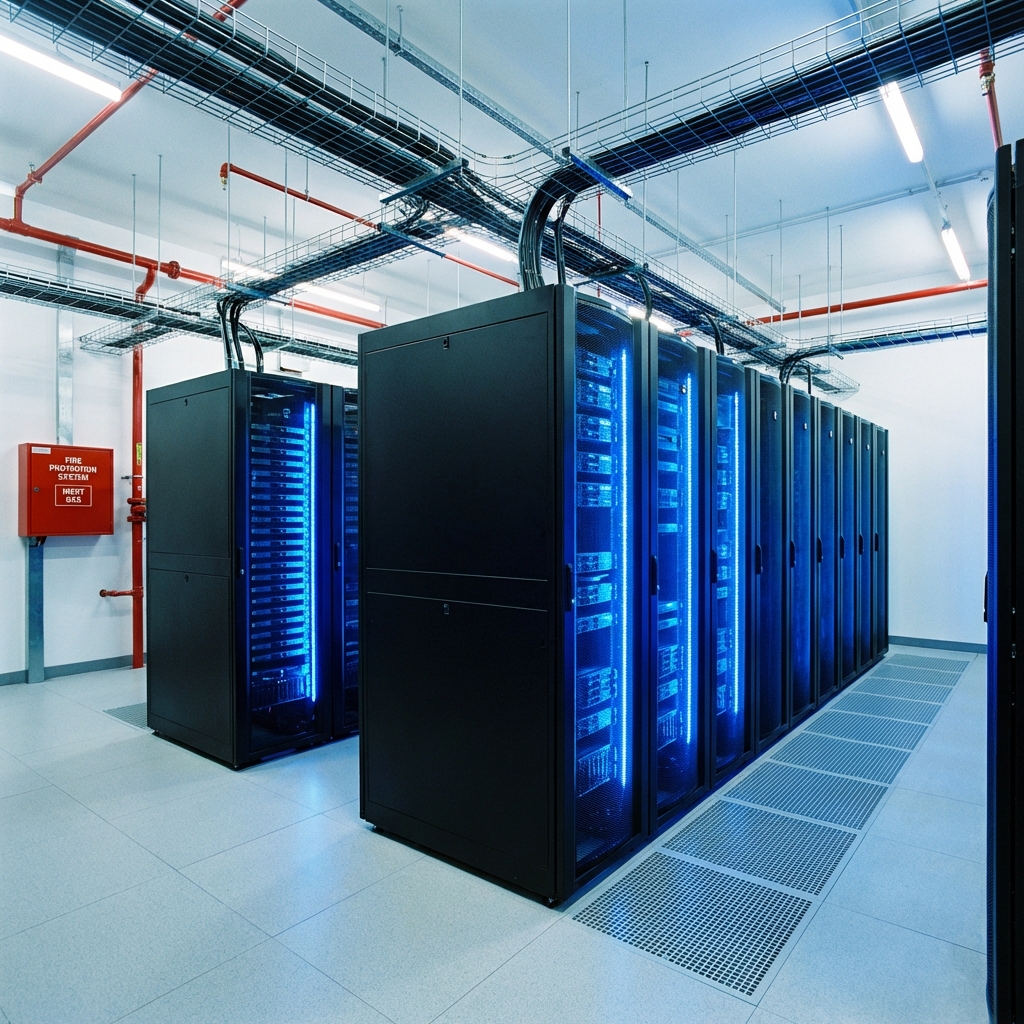
Data centres are the backbone of modern business. A fire event can lead to catastrophic data loss and downtime. The solution? Advanced clean agent suppression systems designed for high-airflow environments.
Data centres typically have high airflow rates for cooling servers. This can dilute fire suppression agents if not accounted for. Systems must be designed to maintain the extinguishing concentration despite air handling units (AHUs), or AHUs must be interlocked to shut down.
A lesser-known risk is the sound of the gas discharge itself. The high-decibel noise created by standard nozzles can actually damage sensitive Hard Disk Drives (HDDs) through vibration.
Solution
We recommend "Silent" or "Acoustic" nozzles that diffuse the gas discharge, significantly reducing noise levels to protect sensitive drive mechanics.
Inert gases (IG-55, IG-541) are popular for data centres because they can be piped over long distances, allowing cylinders to be stored in a remote location, saving valuable white space in the server hall.
They can be used as a last resort (pre-action systems), but they cause irrevocable damage to equipment. Clean agent gas systems are preferred as the primary defense.
The high-frequency vibration from loud gas discharge can cause the read/write heads of HDDs to misalign or crash into the platters, destroying data.
Novec 1230 is excellent for smaller rooms due to its small footprint. For large data halls, inert gases are often more cost-effective and flexible with piping.
Yes. The room must pass a Room Integrity Test (fan test) to ensure it is tight enough to hold the gas concentration for at least 10 minutes.
Ideally, AC units and dampers should close to prevent the gas from leaking out or being diluted. This is controlled by the fire panel.
Typically, there is a configurable countdown (e.g., 30-60 seconds) after detection to allow staff to abort if it's a false alarm before the gas releases.