 blackseed
blackseed
blackseed
"A fire suppression system is essentially a fire fighting system that is designed to control, contain or extinguish fires in a variety of environments."
When designing a fire safety strategy for a high-risk facility, the terminology can often overlap. However, for engineers and facility managers, understanding the distinction between fire detection, extinguishing, and suppression is critical for proper asset protection.
Fire suppression is a comprehensive, engineered system designed to control, contain, or extinguish a fire automatically. Unlike handheld devices, these systems are integrated into the building's infrastructure and act as a first line of defense, often before human intervention is possible.
Suppression systems use various media tailored to the specific risk:
A modern fire suppression system follows a precise sequence to minimize damage:
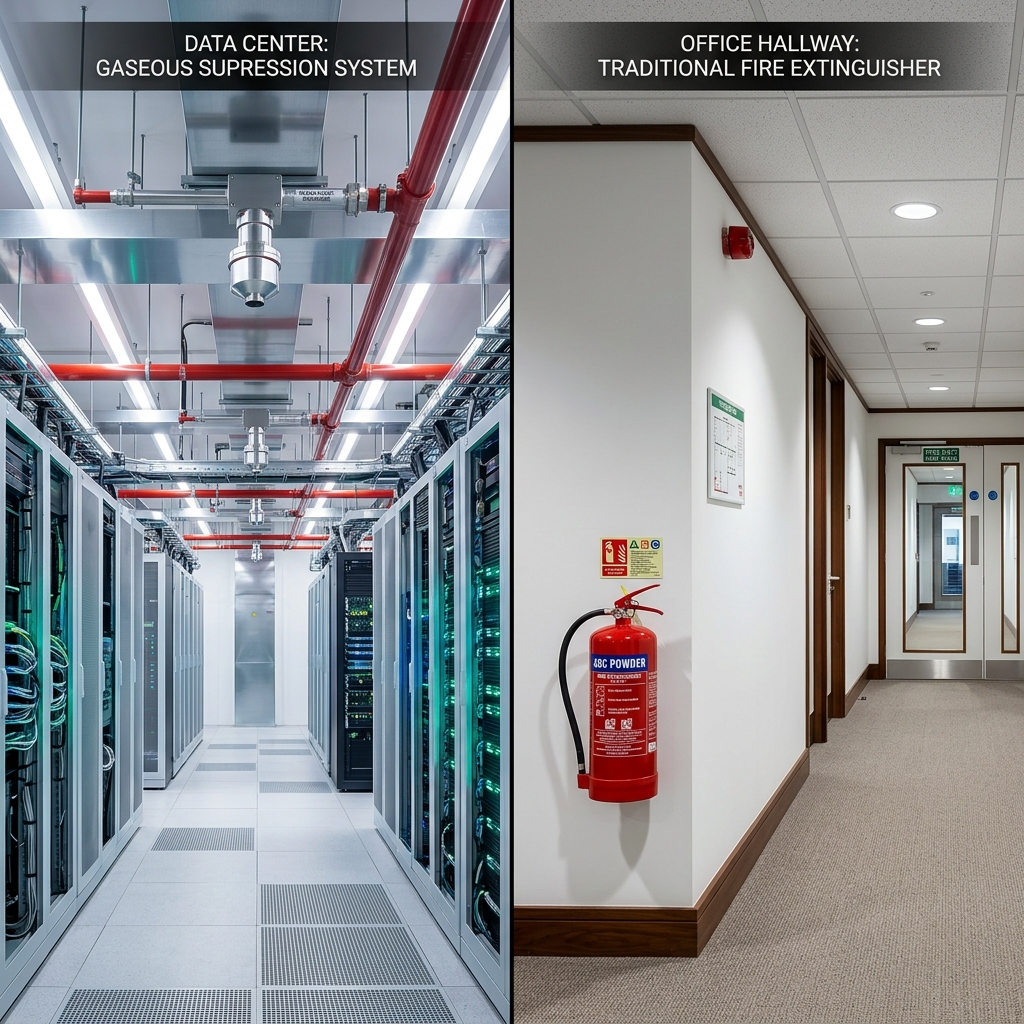
The difference here is often one of scale and automation.
Fire Extinguishing: Handheld or portable devices designed for small, localized fires. Great for vehicles, kitchens, and homes. They require a human operator to pull the pin and aim at the base of the fire.
Fire Suppression: Fixed, large-scale systems for industrial and commercial settings. These are found in data centers, warehouses, and power stations. They operate automatically 24/7 without the need for human intervention.
Not sure which system is right for your environment? Let our engineering team design a custom suppression strategy for your high-value assets.
Request a Technical ConsultationOften, suppression systems serve as the primary defense for sensitive equipment, while sprinklers provide secondary life safety and structural protection as required by local codes.
Most regulatory bodies require semi-annual or annual inspections to ensure the storage pressure, detection logic, and discharge nozzles are fully functional.