 blackseed
blackseed
blackseed
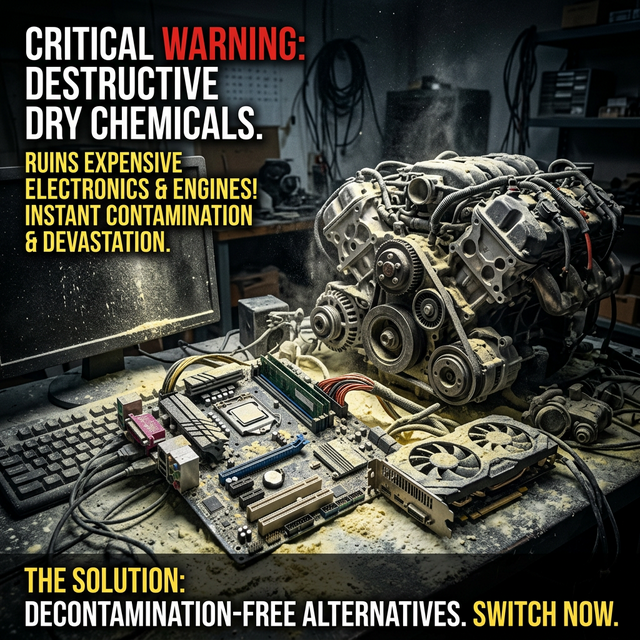
Surviving a fire is chaotic enough—spending the next three months throwing out perfectly fine electronics because they were choked by extinguisher powder is a nightmare you can avoid.
ABC dry chemical powder extinguishers are the ubiquitous red cylinders seen in nearly every hallway, workshop, and office around the world. While they are highly effective at suppressing an open flame, the industrial secret they don't warn you about is the astronomical cost of decontamination. When discharged, the extremely fine, abrasive dust invades every crevice within the room.
When this powder settles onto printed circuit boards, server chassis, and metallic engine blocks, it behaves as a corrosive magnet for moisture. Weeks and even months after the incident, the powder actively eats away at copper traces and delicate electrical contacts, resulting in sudden, catastrophic hardware failures. Clean-agent, decontamination-free alternatives like MAUS exist specifically to neutralize the flame without rendering the surrounding millions of dollars in equipment utterly useless.
Transition away from damaging dry chemical agents and embrace clean technologies that protect your delicate infrastructure.
Review Your Safety SystemsYes. The powder is mildly corrosive and highly abrasive. Even if vacuumed, microscopic particles remain on circuit boards and eventually cause electrical shorts.
MAUS uses a potassium-based gas rather than a solid powder. The gas cleanly dissipates through ventilation, leaving no physical medium behind to cause delayed corrosion.
While powder has high fire-knockdown capabilities for large industrial fires, indoor and technology-dense environments should strongly prefer clean, decontamination-free agents.