 blackseed
blackseed
blackseed
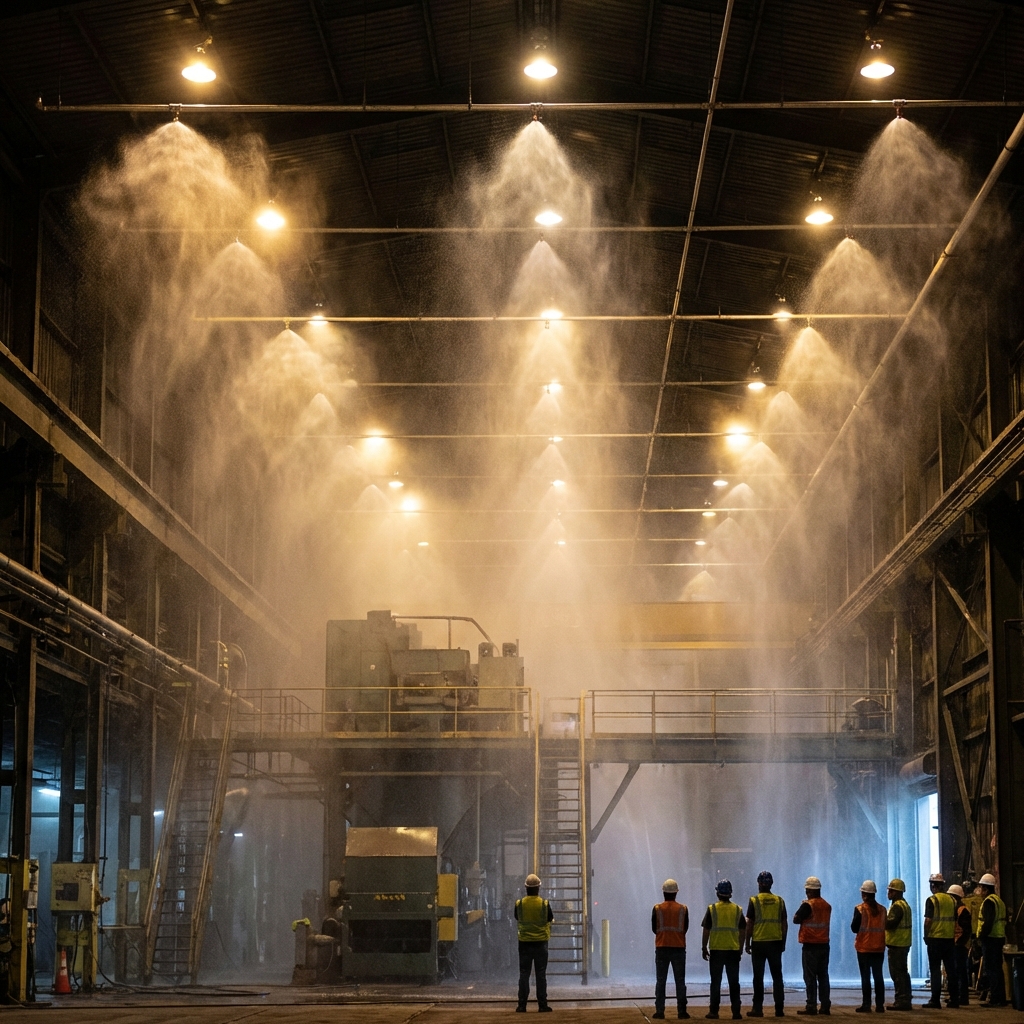
Water mist technology is bridging the gap between traditional sprinklers and gas suppression. By using water more efficiently, it offers robust protection for everything from industrial galleys to data centres.
Conventional sprinklers soak a fire. Water mist systems, however, force water through specially designed nozzles at high pressure, creating a fine mist. These micro-droplets have a massively increased surface area.
Three-Way Attack
Water mist fights fire in three ways: cooling the flame, displacing oxygen by turning to steam, and blocking radiant heat from spreading to nearby objects.
Because the mist is so fine, these systems use up to 90% less water than a standard sprinkler system. This means significantly less cleanup and water damage to property after the fire is out.
Water mist is perfect for locations with limited water supply or where water damage is a concern but gas systems aren't feasible. This includes:
Sprinklers use large droplets to wet surfaces. Water mist uses high pressure to create microscopic droplets that cool the air and block heat radiation.
Yes. The mist is non-conductive at the distances usually employed, as the droplets are not a continuous stream. It is safe for use on electrical equipment up to certain voltages.
Extremely. It cools the oil rapidly without causing the violent splashing that a standard water stream would cause.
Minimal. Most of the water evaporates into steam to fight the fire. The remaining residue is a fraction of what a sprinkler system leaves behind.
No. Because it uses 90% less water, the required storage tank is very small, saving valuable floor space in your building.
Yes. The pipes are stainless steel and much smaller in diameter than sprinkler pipes, making them easier to route through existing walls and ceilings.